Executive Summary
Is surfing Tamarindo Costa Rica worth the trip? Yes. As the country’s most established surf hub, it offers a rare mix of forgiving beginner waves directly in town and world-class advanced breaks just a short drive away, making it the ultimate basecamp for mixed-level groups.
Briefing Outline
If you’re planning your first Costa Rica surf trip, there’s a good chance it starts here. Tamarindo is the country’s most established surf town — the one place on the Pacific coast where a total beginner and an experienced surfer can share a trip and both come home stoked. It’s got a forgiving beach break right in town, a handful of punchier waves a short drive away, and enough restaurants, surf shops, and infrastructure that you’ll never feel like you’re roughing it.
This guide covers everything you need to plan the trip: when to go, where to surf based on your level, what it actually costs, and how to get from the airport to the lineup. If you’ve already decided Tamarindo is your base, jump to whichever section you need. If you’re still comparing it to other towns, this should tell you exactly what you’re signing up for.
Tamarindo at a glance
| Category | Intel |
|---|---|
| Best for | Beginners through advanced — most versatile surf town in Costa Rica |
| Best season | Dry season (Dec–Apr) for consistent, clean conditions; wet season (May–Nov) for bigger swells |
| Nearest airport | Liberia (LIR), roughly a 1.5-hour drive on paved road |
| Vibe | Lively, touristy, full amenities — restaurants, nightlife, functioning infrastructure |
| Water | Warm year-round; boardshorts or a bikini, no wetsuit needed |
| Daily budget | ~$70–110/day traveling lean, ~$145/day average, $250+ for a comfortable trip |
Surf season & swell guide
Tamarindo gets waves all year, but the character of the swell shifts with the season, and that matters more than most people expect when they’re picking dates for surfing Tamarindo Costa Rica.
Dry season (December–April) brings steady NW groundswells paired with offshore trade winds blowing out of the east. This is when conditions are cleanest and most predictable — January in particular tends to produce the most consistent stretch of surfable days. It’s also the best window if you’re learning: smaller, better-groomed waves and blue skies most of the trip.
Wet season (May–November), sometimes marketed as “green season,” swings the swell direction to the SW and tends to deliver more size and more power, especially at the breaks outside the main beach. Mornings are usually clean before afternoon rain rolls in, so dawn patrol becomes the move. Crowds thin out and prices drop, which is worth factoring in if budget or lineup space matters more to you than picture-perfect weather.
“Bottom line: go in dry season if you want consistency and easier waves, go in wet season if you want bigger surf, fewer people, and better rates.”
Best surf spots in Tamarindo (by break)
Tamarindo isn’t one wave — it’s a stretch of coastline with several distinct breaks, and knowing which is which will save you a lot of guessing once you’re there.
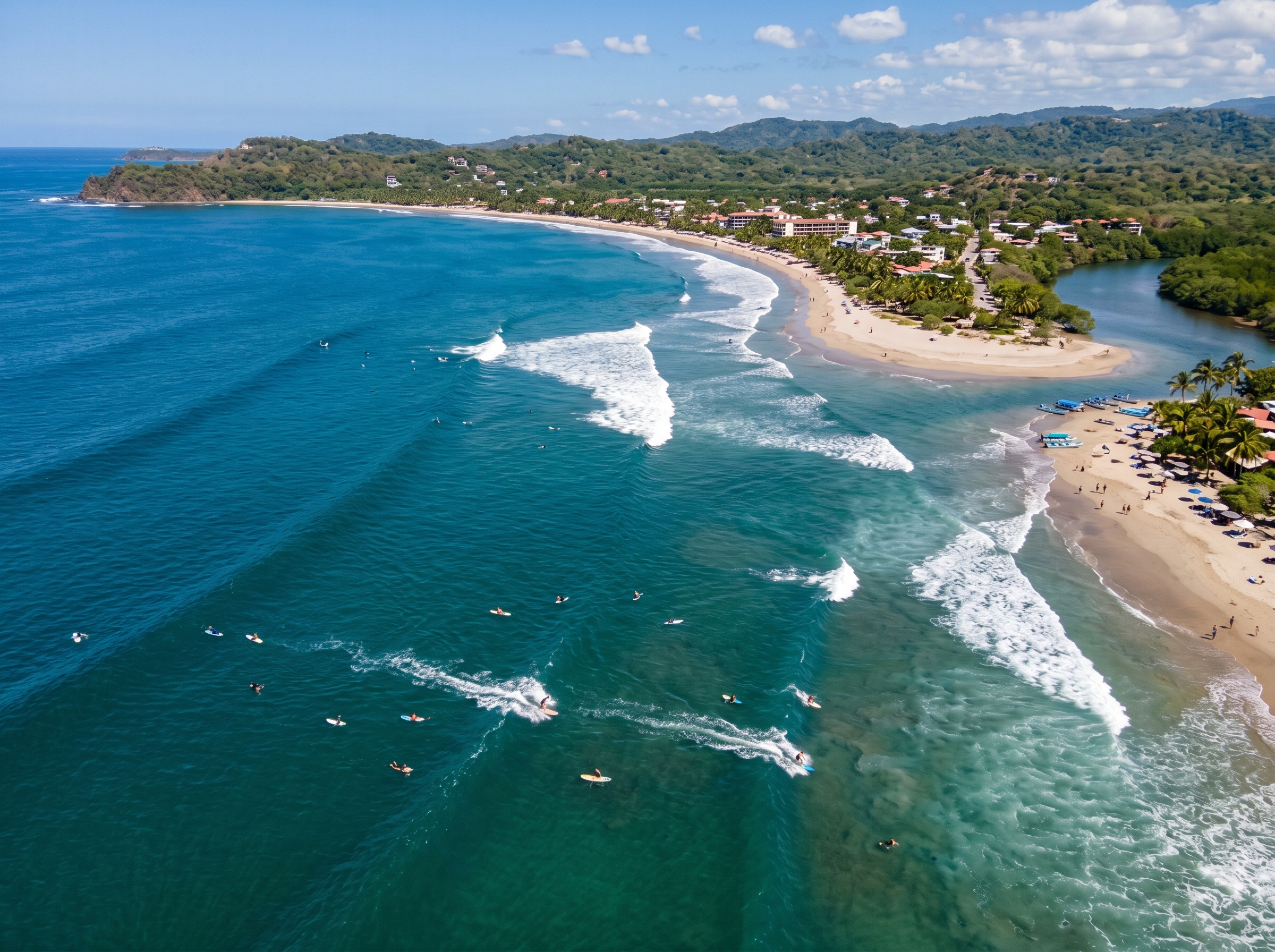
Spot: Tamarindo Main Beach. Timing: The ultimate beginner wave right in town.
Tamarindo main beach & Pico Pequeño
Tamarindo main beach is the wave right in front of town. Sandy bottom, multiple peaks, small and forgiving — usually knee to chest high. This is where nearly every surf school runs lessons, and it’s the easiest wave in the area to paddle out on your own.
Pico Pequeño is a rocky point in front of the Tamarindo Diria area, best at mid tide. More punch than the main beach, better suited to surfers who’ve already got some wave count under their belt.
El Estero (the river mouth)
At the north end of the beach where the estuary meets the ocean. Good sandbars produce fast lefts and rights that longboarders in particular love.
TACTICAL ALERT
Crocodiles are known to inhabit the El Estero estuary. This is a wave to surf, not a spot to swim or linger in the water without paying strict attention to your surroundings.
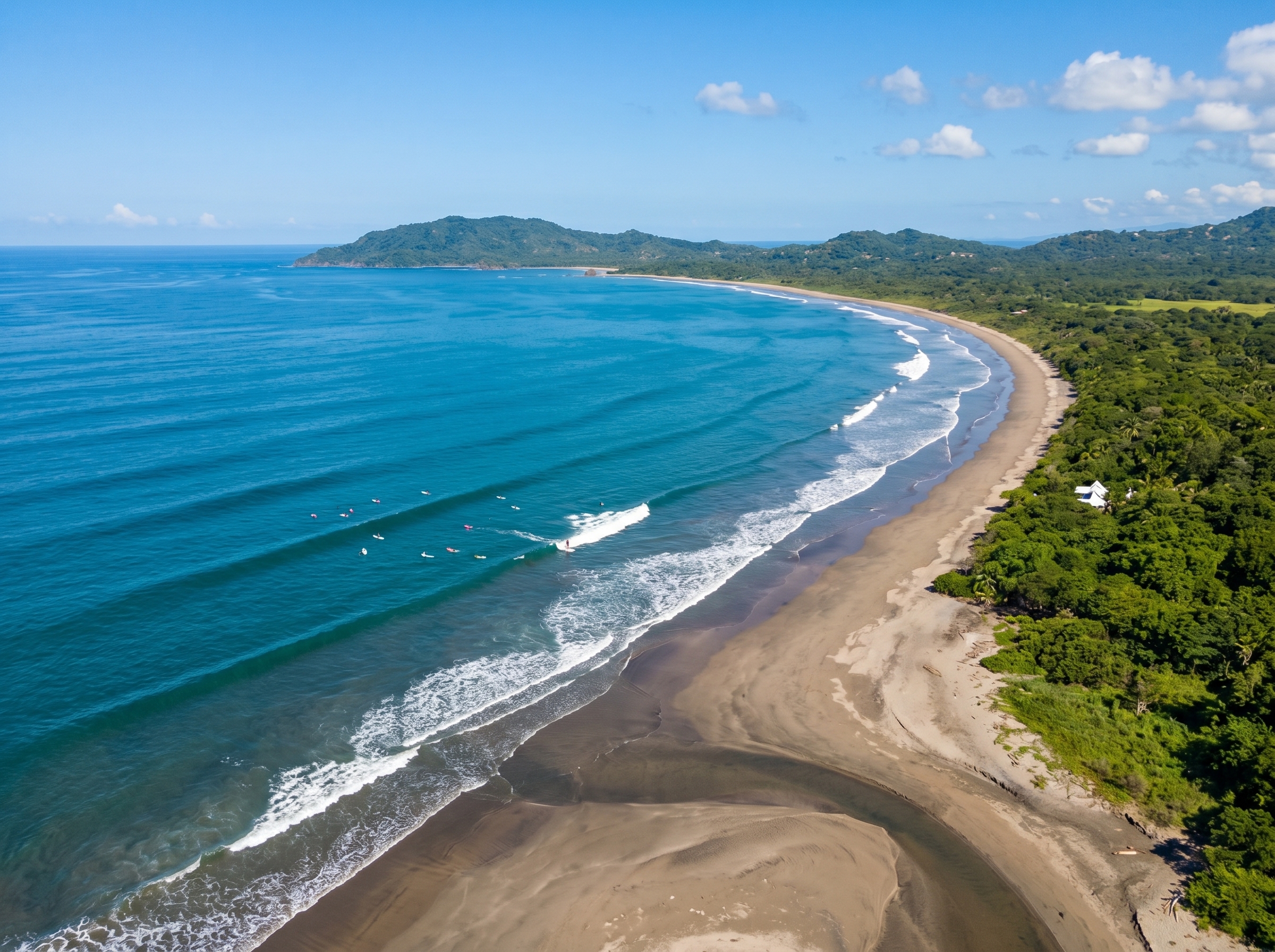
Spot: Playa Grande. Timing: Consistent and powerful beach break across the estuary.
Playa Grande
Across the estuary from Tamarindo, reachable by a 30–40 minute walk/paddle or a short drive around. More consistent and more powerful than the main beach, and the go-to for intermediate and advanced surfers who’ve outgrown Tamarindo’s gentler peaks. It’s also part of Las Baulas National Marine Park, a leatherback turtle nesting site (roughly October–February).
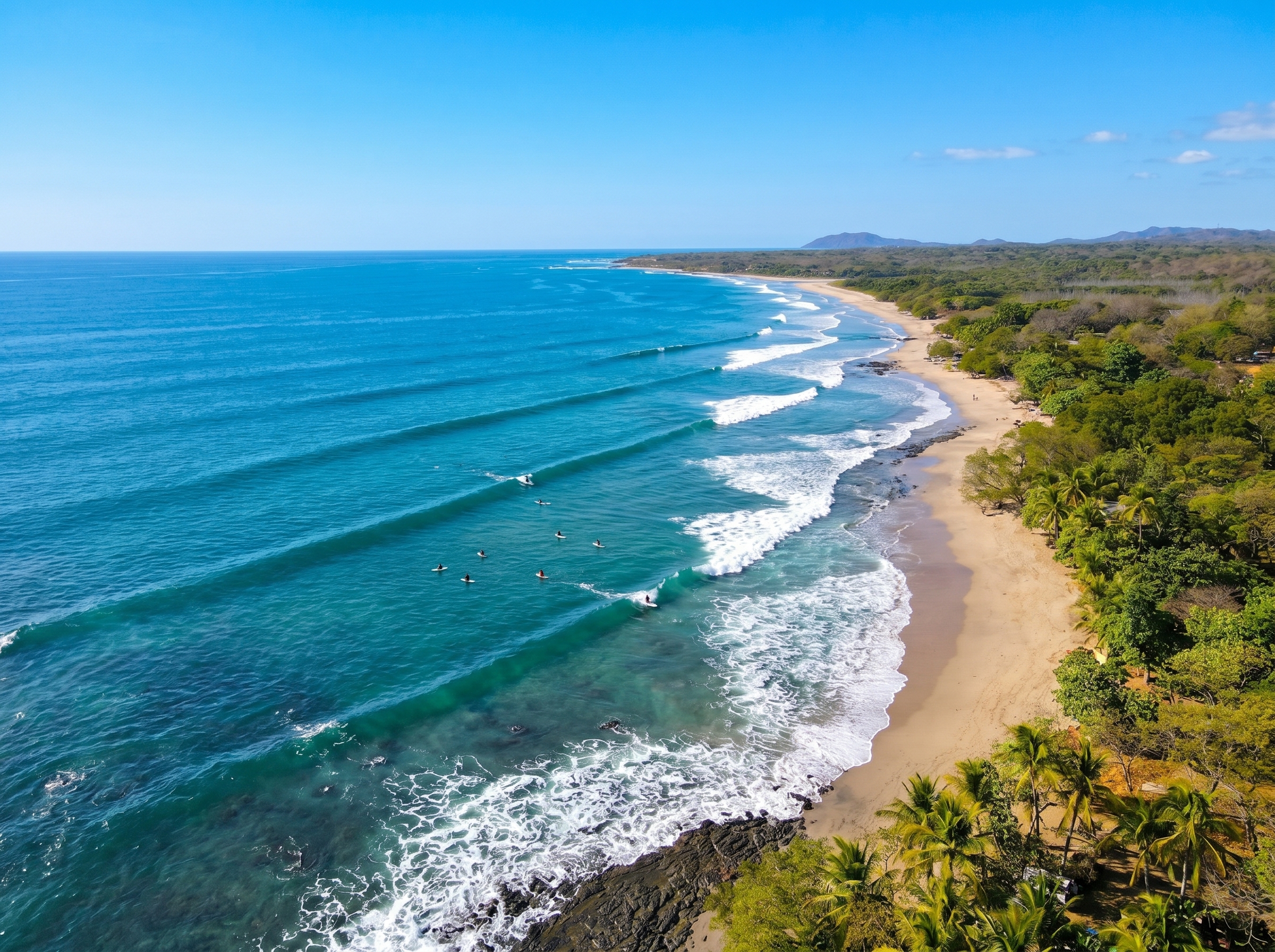
Spot: Playa Avellanas. Timing: Works well on both high and low tides.
Playa Avellanas (“Little Hawaii”) & Playa Negra
Playa Avellanas is about a 16 km drive south. Hollow, well-shaped rights and lefts that work on both low and high tide, making it one of the more reliable options in the area. Intermediate to advanced.
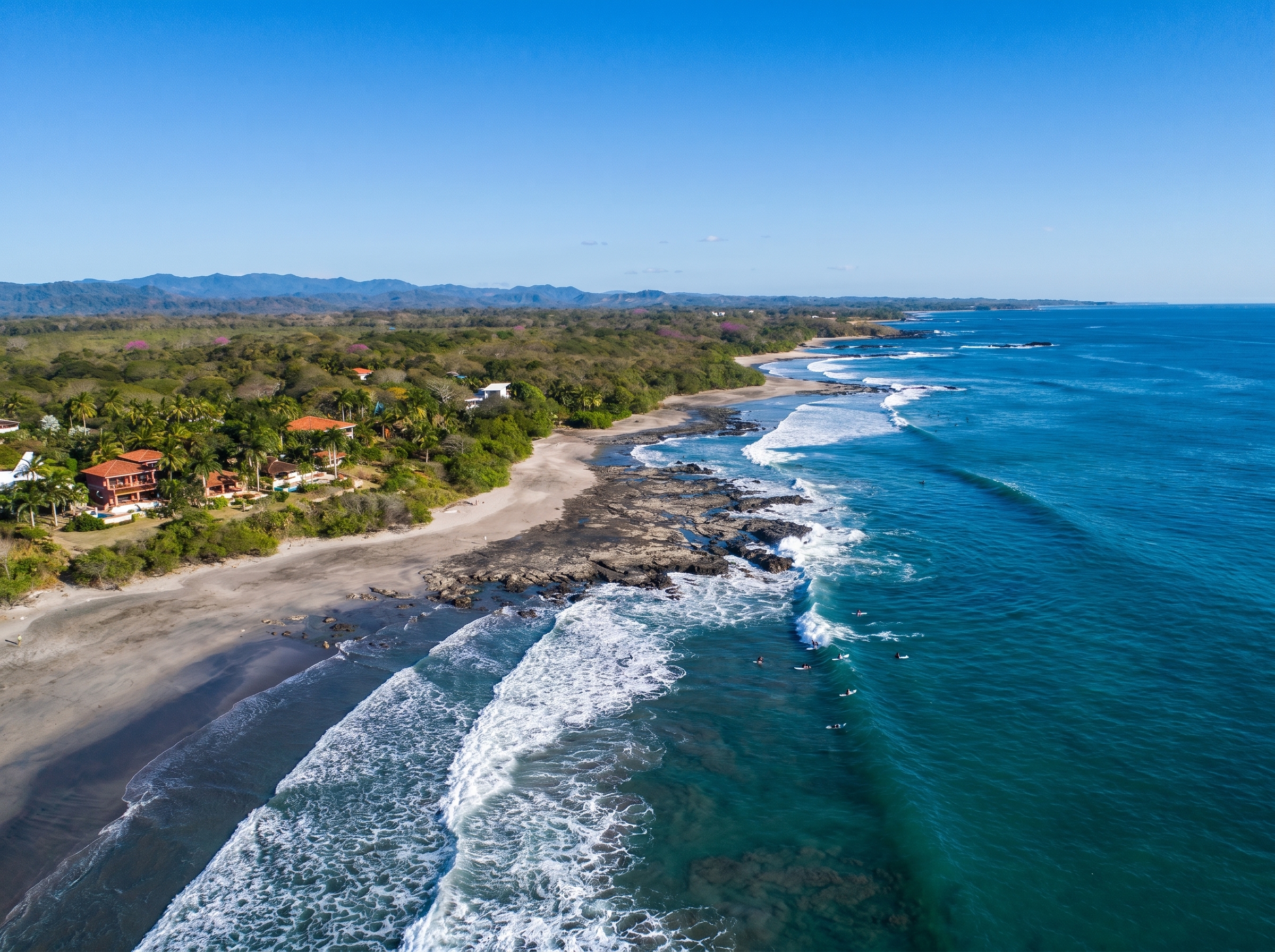
Spot: Playa Negra. Timing: Fast, hollow right-hand point break for experienced riders.
Playa Negra is a few kilometers past Avellanas. Black sand, a fast right-hand point break, and one of the more famous names in Costa Rican surfing thanks to its appearance in Endless Summer II. This one’s for experienced surfers only.
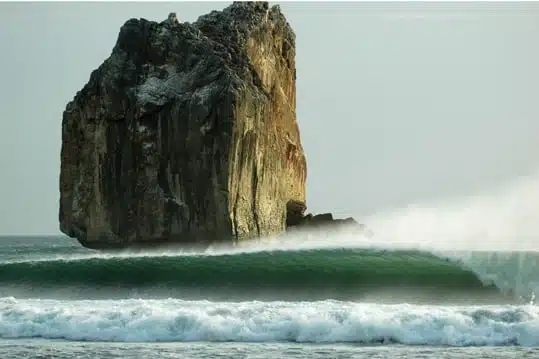
Spot: Witch’s Rock. Timing: World-class breaks accessible by boat charter only.
Witch’s Rock & Ollie’s Point
The furthest-flung and most advanced options, both inside Santa Rosa National Park and accessible only by boat charter from Tamarindo (a roughly 4-hour round trip). Powerful, hollow, and genuinely world-class when it’s on — but not a beginner or intermediate outing.
Access the Spot Explorer
Don’t surf blind. Map out Tamarindo’s peaks and nearby breaks using our interactive Spot Explorer to find the exact, safe coordinates for your skill level.
Surfing Tamarindo by skill level
- Beginner: Tamarindo main beach. Full stop — this is the wave to learn on, and it’s why so many surf schools are based right here.
- Intermediate: Playa Grande and Playa Avellanas, once you’re comfortable reading a beach break and paddling into overhead waves.
- Advanced: Playa Negra, Pico Pequeño at the right tide, and boat trips out to Witch’s Rock or Ollie’s Point when you want something with real teeth.
Most surfers on a week-long trip end up sampling more than one of these — the main beach for a warm-up session, then a day trip to Grande or Avellanas once you’ve found your legs.
Surf schools & lessons
Tamarindo has the deepest bench of surf schools and camps of any town in Costa Rica, which is part of why it’s such a strong choice if you’re learning or traveling with a mixed-level group. Options range from single group lessons to full week-long surf camp packages that bundle accommodation, lessons, board rental, and airport transfers into one price. For a full breakdown of who to book with and what to expect from a lesson here, see our complete guide to Tamarindo surf schools for beginners.
Where to stay in Tamarindo
Where you base yourself changes your trip more than people expect. Stay right in town and you’re walking distance to the main beach, restaurants, and nightlife — but also the busiest, priciest strip in Tamarindo. Stay closer to the estuary or toward Playa Grande and you trade some walkability for quieter mornings and easier access to the more advanced breaks.
Rather than scrolling through dozens of booking sites, we’ve pulled together vetted stays for Tamarindo through our Expedia travel shop.
If you want to be right on the sand: Hotel Tamarindo Diria Beach Resort is our beachfront pick — the only true beachfront resort in town, with a 9.0 “Wonderful” guest rating and rooms starting around $229/night.
Check current rates →
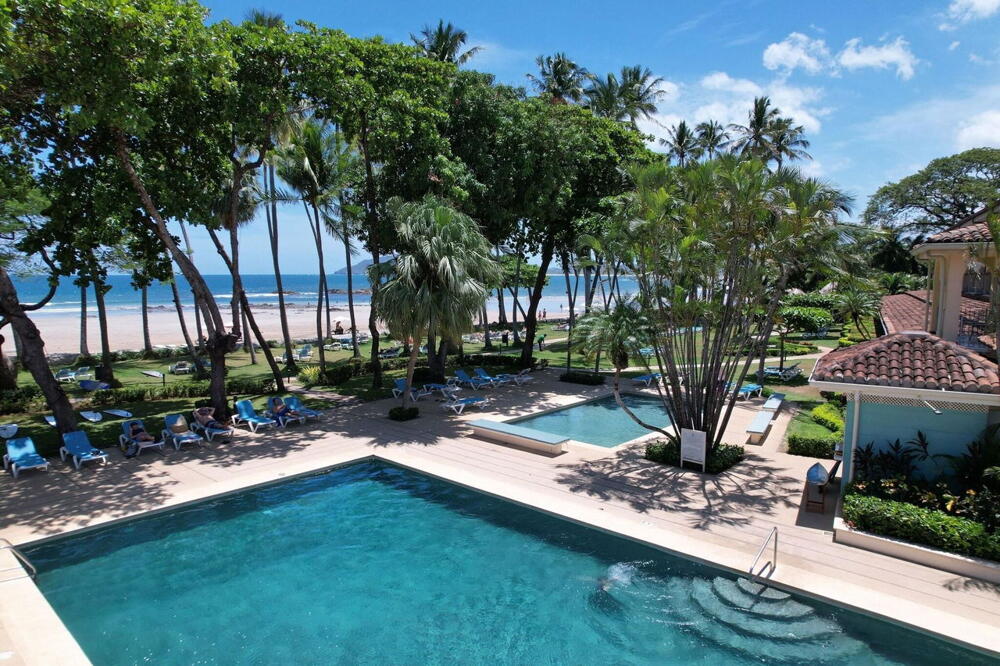
Spot: Hotel Tamarindo Diria. Vibe: Premium beachfront resort in the heart of town.
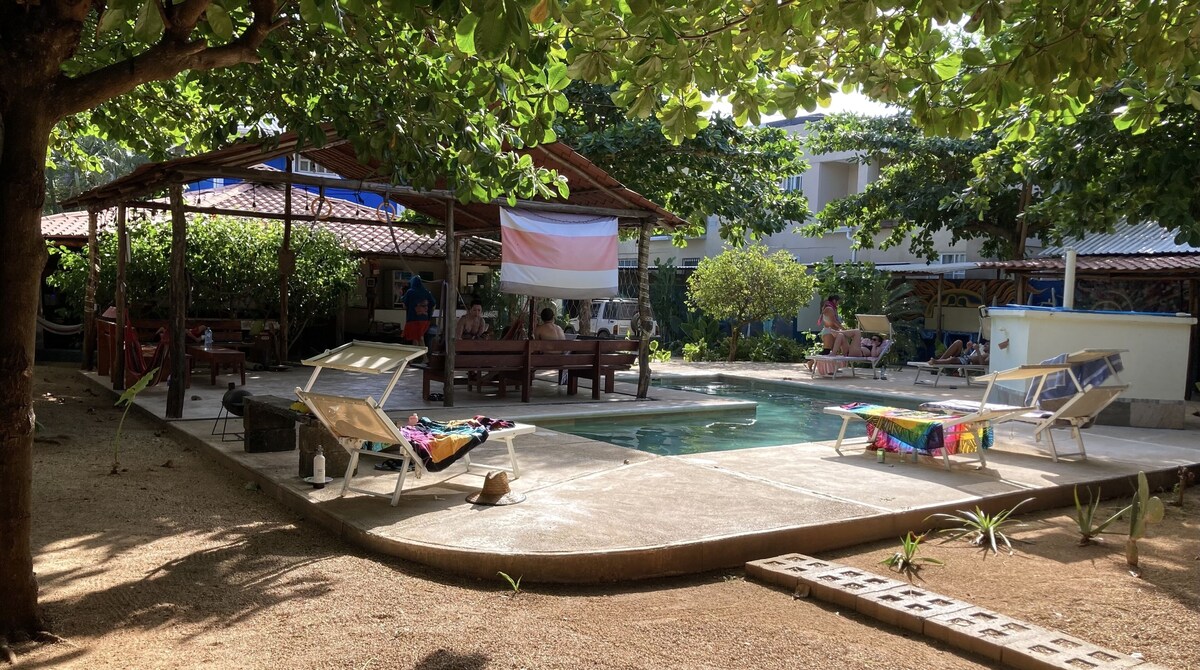
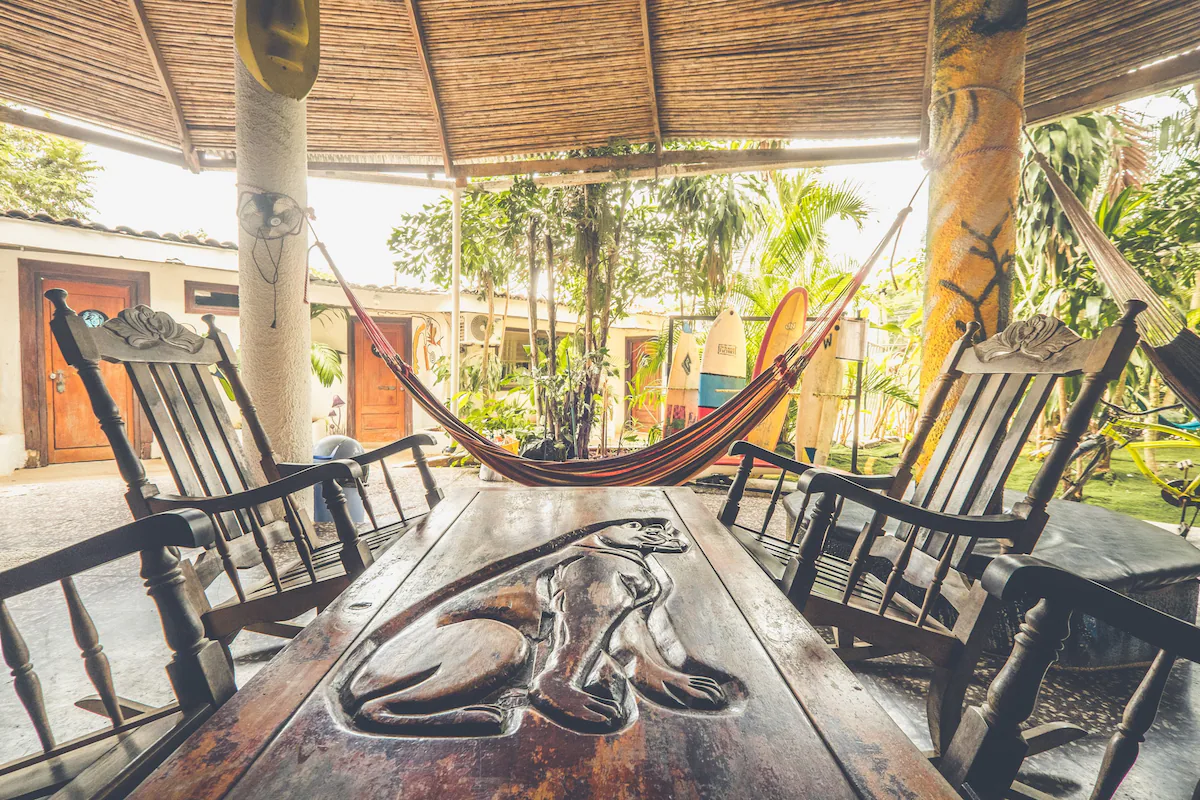
If you’re keeping costs down: our Tamarindo Budget Hotels collection has five solid options, each with a different personality:
-
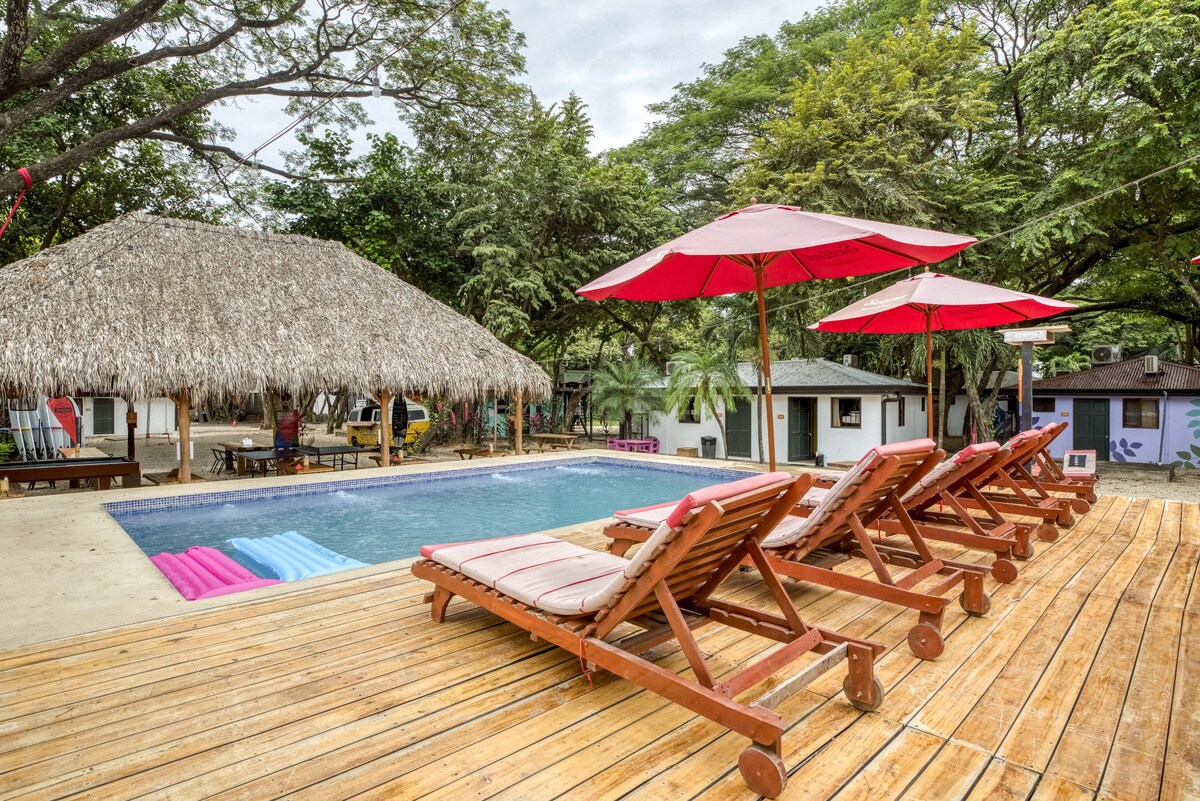
Slumber Party Tamarindo — a Selina-brand property right on the beach strip, with a pool, bar, restaurant, and billiards. More polished than your average hostel.
Check current rates →
Spot: Slumber Party Tamarindo. Vibe: Polished beachfront hostel with lively social spaces.
-
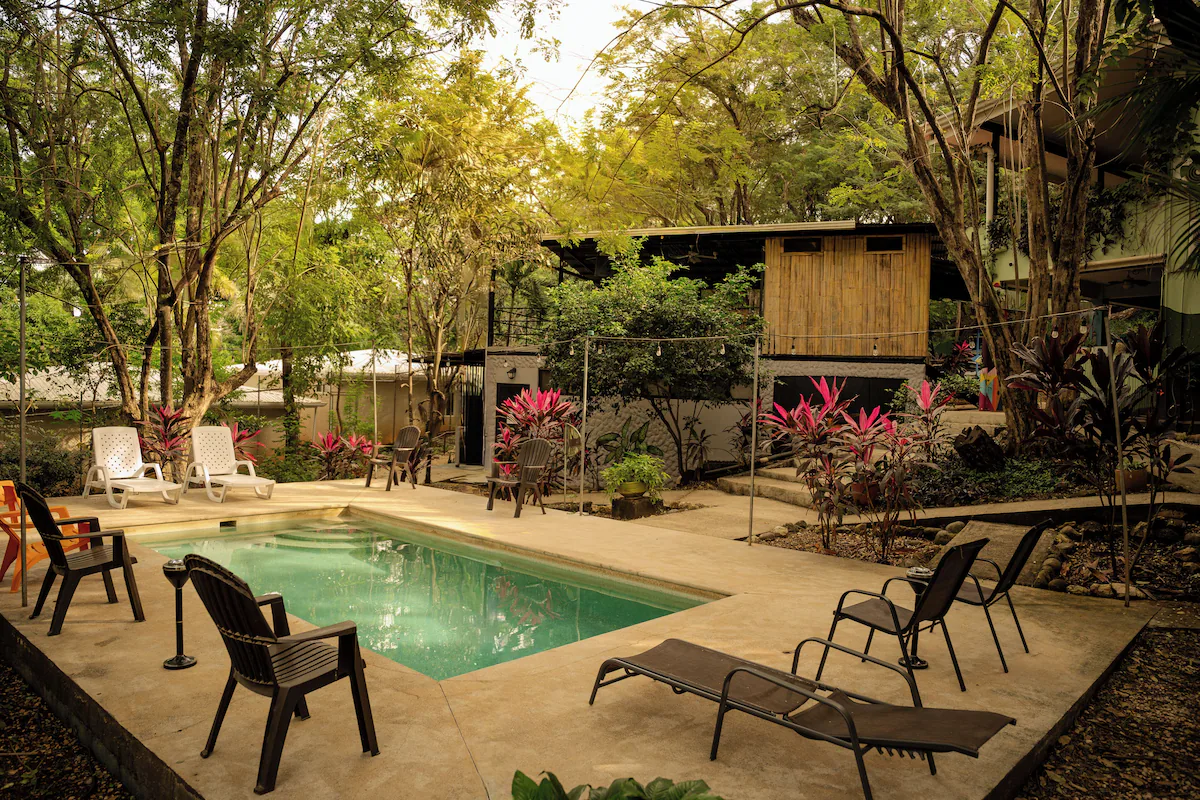
TamaHostel & Glamping — dorms and glamping tents in a jungle garden setting, a quieter crowd, plus yoga and surf classes on-site.
Check current rates →
Spot: TamaHostel & Glamping. Vibe: Jungle garden dorms and tents for a relaxed pace.
-
Pura Vida Hostel — steps from the beach with a laid-back garden vibe, local breakfast included, and even an arcade room and kids’ playground.
Check current rates →
Spot: Pura Vida Hostel. Vibe: Laid-back garden setting steps from the sand.
-
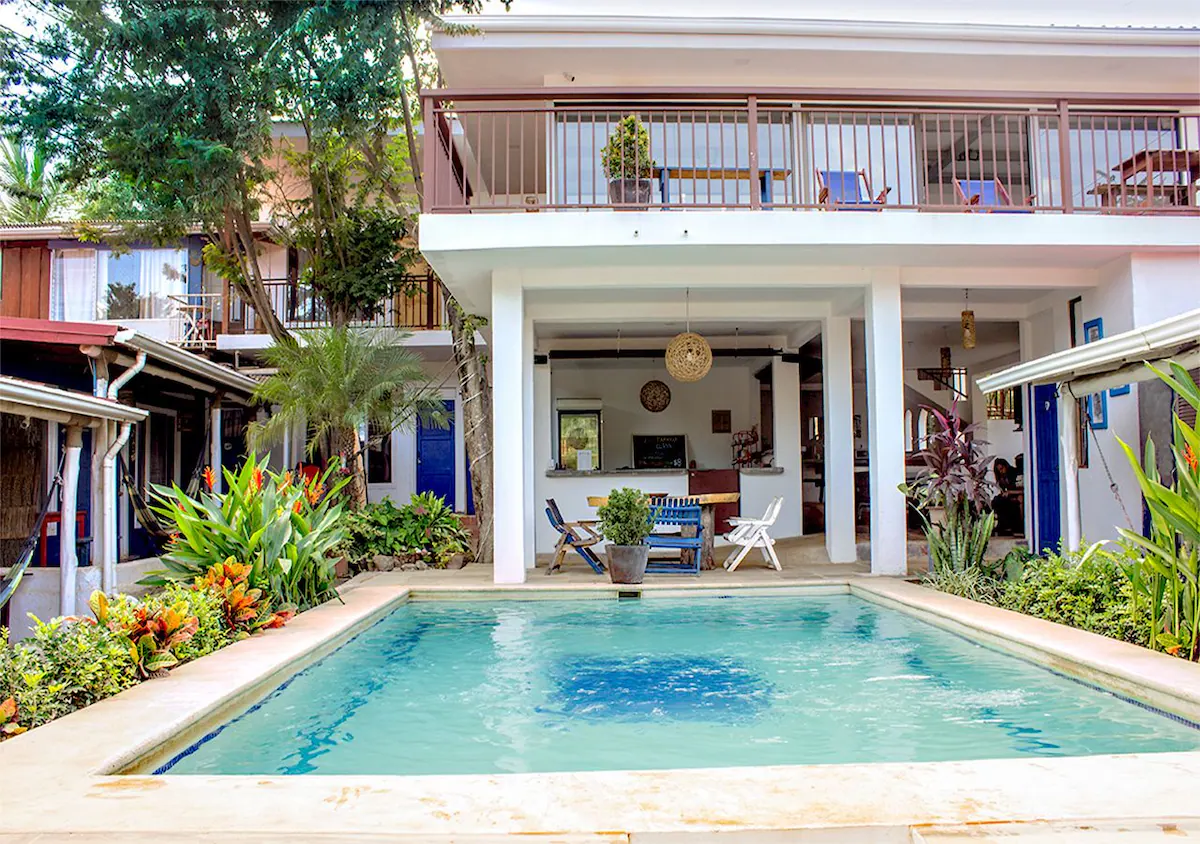
Casa Pura Vida Surf Hostel — 200m from the beach with board rentals and repairs on-site, a pool, full kitchen, and a strong social atmosphere.
Check current rates →
Spot: Casa Pura Vida Surf Hostel. Vibe: Strong social atmosphere with dedicated board storage.
-
La Botella de Leche — one of Tamarindo’s top-rated hostels, running its own surf camp and yoga classes, with 24/7 board storage.
Check current rates →
Spot: La Botella de Leche. Vibe: Top-rated basecamp featuring an in-house surf camp.
For a neighborhood-by-neighborhood breakdown of where to base yourself depending on your budget and priorities, check out our dedicated Tamarindo accommodation guide.
Getting to Tamarindo & getting around
The nearest international airport is Liberia (LIR) — Daniel Oduber Quirós International — about a 1.5-hour drive away on paved roads, making it by far the easiest surf town in Costa Rica to reach. Most travelers book a private shuttle or transfer straight from the airport; renting a car is also an option if you want the flexibility to explore Avellanas and Negra independently.
Master Your Travel Logistics
Use our detailed Travel Logistics tool to map out local transportation and ensure a seamless journey from the airport to the lineup.
San José (SJO) is the other international airport, but it’s a five-to-seven-hour journey by road or bus, so unless you’re combining Tamarindo with other parts of the country, Liberia is the far better entry point.
Once you’re in town, Tamarindo itself is compact and walkable. Scooters and bikes are easy to rent if you want to cover more ground, and taxis are readily available for trips out to Avellanas or Negra if you didn’t rent a car.
What a Tamarindo surf trip actually costs
Tamarindo is one of the pricier surf towns in Costa Rica — you’re paying for the infrastructure and convenience — but it still works across a wide range of budgets.
- Budget (hostel, self-organized): roughly $70–110/day. Dorm beds run around $14–16/night, and you’ll keep costs down by eating at local sodas and skipping the rental car.
- Mid-range: averages around $145/day per person, factoring in a private hotel room, restaurant meals, and the occasional tour or boat trip.
- Comfortable/premium: $250–300+/day, covering nicer hotels, a rental car, and add-ons like sunset sailing trips or a surf charter to Witch’s Rock.
Calculate Your Trip Costs
Run your numbers through our interactive Budget Planner to ensure you don’t drain your travel wallet before your trip even gets fully started.
For a week-long trip, that translates to roughly $550 on the low end (hostel-based, self-organized) up to $4,000+ for couples or families wanting a more premium experience. All-inclusive surf camp packages typically start somewhere in the $850–900+/week range. For the full line-item breakdown, see our Tamarindo surf trip budget guide.
Beyond the surf
Tamarindo has more going on than most Costa Rican surf towns, which is a big part of its appeal if you’re traveling with non-surfers or just want rest days that don’t feel wasted. Estuary boat tours ($40 range) get you close to crocodiles, howler monkeys, and birdlife. Sunset sailing trips (around $85/person with an open bar) are a popular way to close out the day. If you’re visiting between October and February, a guided leatherback turtle tour at Playa Grande is worth building into your itinerary.
Safety, crowds & etiquette
Tamarindo is generally considered one of the safer beach towns in Costa Rica — most incidents are petty theft (bag snatching, car break-ins) rather than anything violent, so the standard precautions apply: don’t leave valuables on the beach, and lock up anything left in a rental car.
TACTICAL ALERT
In the water, rip currents are the real hazard, especially at high tide, on windy days, or when a fresh swell is rolling in. Lifeguard coverage is limited. If you get caught in a rip, don’t fight it: swim parallel to the shore until you’re out of the pull, then angle back in.
Crowds are worth planning around too. Tamarindo is the most popular surf town in the country, and the main beach lineup can get genuinely packed at peak times, particularly during the dry season. If you want more room, an early session or a trip out to Avellanas will thin things out considerably.
Keep reading
Ready to dig into a specific piece of your Tamarindo trip? Here’s the rest of the series:
- Best Surf Schools in Tamarindo for Beginners
- Where to Stay in Tamarindo for Surfers: A Neighborhood-by-Neighborhood Guide
- Tamarindo Surf Trip Budget: What It Actually Costs
And if you haven’t already, grab the full Costa Rica Surf HQ planning guide — 40+ pages of offline maps, break profiles, and travel intel for every surf town in the country, guaranteeing you make the most out of surfing Tamarindo Costa Rica.